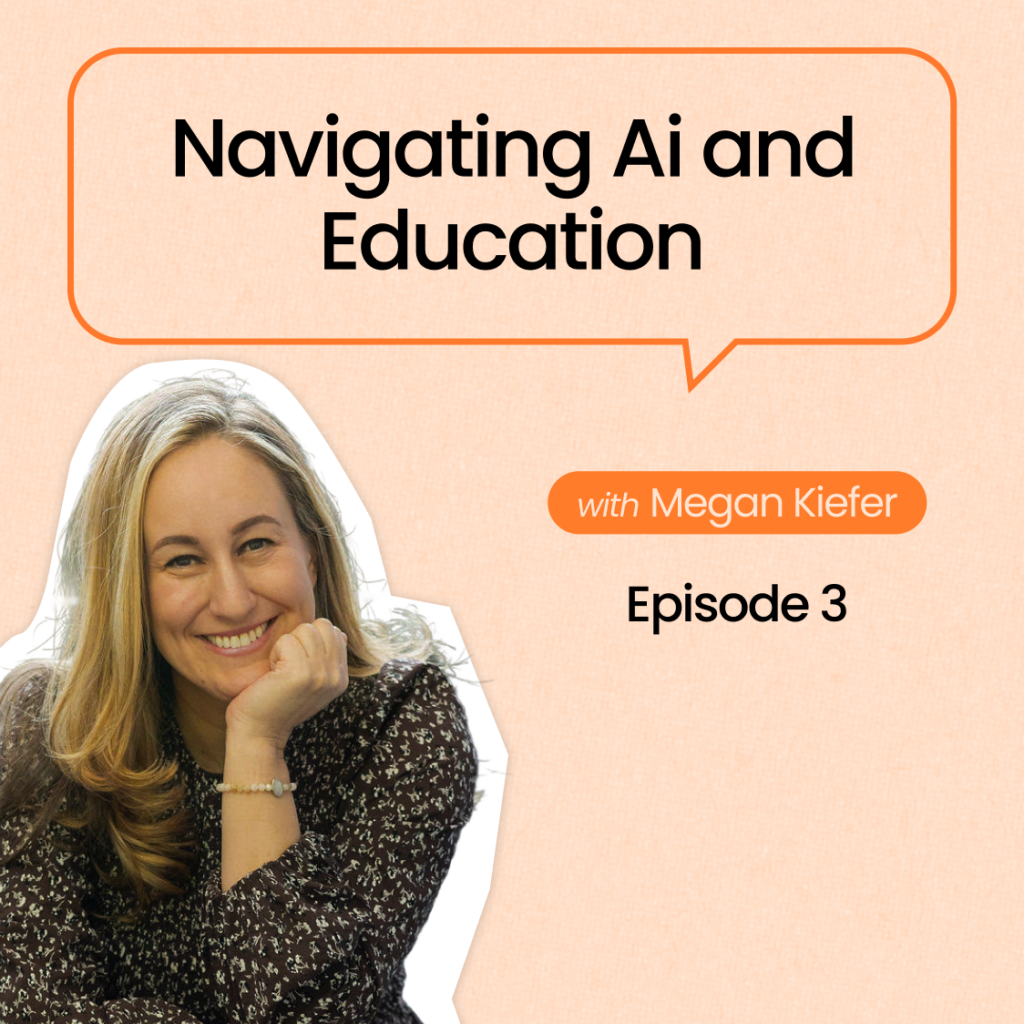
Our kids are growing up with less opportunity to struggle, wait, wonder, and simply be bored. Megan Kiefer, founder of Take Two Media Initiative and author of The Take Back, joins Bill Brady to share what she’s learning directly from kids about technology, AI, and healthy media habits. They explore the power of kids teaching kids, why boredom and discomfort matter, and how parents can help kids build healthier relationships with technology.
Episode Transcript
Megan: When young people are awokened to this problem and this issue, when they can really take leadership in this space, they’re going to be the ones to solve this. They’re going to be the ones to save us. They’re going to be the ones that choose differently.
Bill: Welcome to Protecting Childhood, a podcast about raising kids in a digital world. We help parents navigate technology with confidence, set healthy boundaries, and raise kids who thrive beyond the screen. I’m Bill Brady, founder of Troomi. Today, I’m talking with Megan Kiefer, founder of Take Two Film Academy and Take Two Media Initiative and author of The Take Back. We talk about what Megan is learning directly from kids, why peer-to-peer education can be so powerful, and how AI and technology are changing the way kids learn and think. You’ll leave with a hopeful reminder that our kids are capable of building healthier relationships with technology and practical ideas for how we can help them get there. Megan, thanks so much for joining us today. I am thrilled to have you on. I’ve known you for about a couple years and have been really excited to have you join us today.
Megan: I am so excited to be here. I’ve been a fan of Troomi and of you for a couple years. This is really just a great next step in our relationship as we talk about this important matter.
Bill: As we’ve gotten to know each other, I’ve really been impressed that we’re very aligned about what it means to really protect childhood. I’d love to hear and have people learn a little bit about what got you into this work to begin with.
Megan: Yeah, the genesis of my work, I started my company, Take Two Film Academy, 16 years ago. We were teaching the craft of filmmaking to kids as young as kindergarten. About a few years into that, when young people are awoken to this problem and this issue, when they can really take leadership in this space, they’re going to be the ones to solve this. They’re going to be the ones to save us. They’re going to be the ones that choose differently. In 2015, I really started to notice, just as YouTube started to get a lot of traction, I started to notice the effects of social media, YouTube, fast videos that are short, having a really detrimental effect on young people through comparison, through thinking bad about themselves, which is it felt like a different time. It felt like the middle hours I used to work with had all of a sudden changed. I got really interested in 2018 on what is this notion of actually media literacy? When we look at the definition of media literacy, media literacy is the ability to access, analyze, evaluate, create, and act using all forms of communication. That did encompass filmmaking. It felt like a natural progression. I ended up writing my first book, The Third Dimension of Literacy, based off this idea that not only do we now in society need to be able to create media responsibly, but we now need to be able to consume media responsibly. We started our nonprofit arm, the Take 2 Media Initiative, which is really just about doing that. For a while, we were struggling with what is this nonprofit really going to be? Are we going to be putting on events and teaching people about media literacy? Are we going to just wonderful thought leaders in this space and just doing collaborations? About, I want to say like three years ago, it really hit me like a ton of bricks because I was like, “We work with young people, teaching them how to make media responsibly.” Part of that project-based learning approach really empowers them as storytellers. We get to see them take their own thoughts and ideas, their own learning, and take it and put it on a big screen or a small screen or any screen. Then they get to see what it feels like to use media as a tool for self-expression, for activism, for anything they want to feel power in. I just sort of like, “We’ve been doing this work for so long that what if we started to teach media literacy, the fundamental goals, like fundamental understanding of media literacy, which encompasses news literacy, social media, technology, games, anything that young people are, AI, anything that young people are using to communicate their thoughts and ideas, that falls under the umbrella of media literacy. What if we started to teach this material to young people, gave them leadership in the space where they could go then teach younger peers, their parents, all on this subject, and actually have them make media on this subject that could help transform their generation. Using media to teach media literacy has been sort of our fundamental objective.
Bill: Brilliant. What struck me about the program as you put it together, tell us more about the media ambassadors and how you’re having kids reach kids. Tell us more about that.
Megan: We launched our first cohort of media ambassadors two years ago. To be completely honest, I learned by teaching others. That’s how I learned. That’s how I even started the first, my first students that I taught film to. I didn’t really know much about filmmaking, and I used them to learn about it myself as I taught them. I brought my first cohort of young people, teenagers together. I just started asking the really smart people I know to come in and teach them and teach me at the same time. We brought together our first cohort of media ambassadors. We designed a curriculum with that understanding of I’m going to learn and they’re going to learn with me. Then as a result of that, it’s evolved. Now we go into schools across New York City and we don’t just bring the project-based learning element. We actually go in and now we teach cohorts of young people within the schools about these topics and issues. We talk about group chats. We talk about bad actors that are online that may not have their best interests at heart. We talk about how to behave on video games. We talk about social media comparison. We talk about chat bots and AI. We talk about so many wonderful things. We almost turn into group therapy. Then they get trained as a result of not only looking at their own material, but by being prepared to present to their entire school.
Bill: How old are these kids when you talk about these ambassadors? Give us a sense of that.
Megan: Yeah. We’ve done this curriculum with fifth graders. We’ve done it with sixth, seventh, and eighth graders. We’ve done it all through high schools. What’s great is that originally what we were doing was we were training high schools, kids, and they were going to elementary and middle schools, which we still do, but it got challenging getting the kids from place to place in New York City based off of permission slips and chaperones and all that stuff. We decided actually what might be more effective is training cohorts within schools so those kids can become the initial leaders and then have them go classroom to classroom to classroom and having these group conversations and basing it on the needs of the school. I have elementary school principals call me and they’re like, “Oh my gosh, Megan, you’ve got to come talk to the parents about group chats.” I go and I talk to the parents about group chats and I’m like, “You know what? No one would be better for me to talk to the kids about the group chats and then have them talk to each other about the group chats.”
Bill: Where do you see the power in that? I think that’s magical. I’d love to hear about some experiences. How have you seen the ambassadors change and grow? How have you seen the message received by other kids?
Megan: That just gives me goosebumps even just thinking about that because the impact is astonishing. When you own the material, when you actually have an insight, yourself, about your own habits that could be compulsions, that could be addictions, and then you go and talk and teach about it, that reinforces the learning. Young people, what’s great about their brains is they’re still developing. There’s a beautiful Sanskrit term called samaskar and it means that the pathways of your thinking are not fully set in stone. As we get older, we’ve created deeper samaskars in our way of thinking and being. But young people, they don’t have that yet. There’s such a beautiful opportunity to change that samaskar, those habits. I’ve had young people come up to be like, “Miss, I didn’t like do my video game until three in the morning last night. I went to bed at 10 p.m.” I said, “Wow, that’s great.” This particular student, his dad works at night. If he doesn’t wake up early when his dad comes home, he doesn’t see his dad. He’s like, “I got to wake up early and have breakfast with my dad that day.” Just these small things that may not seem that big are huge. I feel like those are the moments when a young person can have their own reflection, their own insight about their own experience and then teach and talk about that to others. That is very profound. It’s very small.
Bill: Having kids receive that firsthand conviction from other kids is a completely different level than being preached to by an adult. It’s awful. I can only imagine.
Megan: Remember when you were a teenager, if your parents told you not to do something, what is your first inclination? That’s perfectly normal for their development. When kids are younger, parents have, and I’m going to use this word intentionally, they have authority over how they spend their time and what they’re allowed to do. As they get older, that authority dwindles and rightly so. That’s part of young people’s development. They’re supposed to break and create some separation from their parent. The same methods that you used in early childhood development are not going to be the same methods that can be used for an older student, like a middle school, high school age student. The idea that we can be like, you can do that, but you’re probably not going to have the best relationship with your kid as a result. If you show them or in schools, they’re teaching them about this material and then they have to go and teach to others, it’s sort of like a Tai Chi method where it’s like you’re not going into combat, you’re kind of going into a nice flow.
Bill: I love it. You mentioned something that stood out to me a minute ago and you talked about the emergence of AI and how AI now folds into everything that we’re discussing relative to kids and technology. What do you think the impact of AI is having on things like curiosity and critical thinking and creativity? What are your thoughts there? What are you seeing with the kids?
Megan: Yeah, it’s interesting. I think parents are rightly concerned that AI is definitely going to disrupt the development of our kids. When you talk to kids and how they’re using it, it’s sort of a different thing going on. They’re nervous about it. I talked to a lot of my older high school aged kids and also going into college students and they are feeling concerned as to what’s going to happen for them with regards to jobs. I think a lot of parents are feeling that fear. When it comes to young people’s development, I think this is a feeling shared by most people is that learning over the last 15 years has become this gamification of learning. There’s all this dopamine added to our learning. There’s a lot of tech in the classroom. And while learning being fun is important, I think what we’ve done as a result is we’ve kind of lost the value that learning also, there’s struggle as a part of learning. Friction is needed to learn something. Technology at its essence, and we can look back as early as the invention of any kind of technology that’s made our lives easier, we have to kind of ask ourselves, when it comes to young people’s development and it comes to staying human in an AI world, how are we going to look at integrating AI into that? And to be honest, my personal feeling is that we shouldn’t. That AI has no place in a child’s learning unless it’s really a teacher using it to help personalize an IEP or a learning system for a child. Because when we start to outsource everything to a chatbot, the promise of these individualized tutors that have endless patience, right? I think we end up moving away from what education is really meant to be. And it’s meant to be how do we problem solve with each other? How do we grapple with challenging work? How do we communicate our own thoughts and ideas? A lot of people say, “Well, we don’t need to memorize anything anymore.” Well, if we don’t memorize anything or learn things deeply, how are we going to know what to put into AI to get the outcomes that we are looking to get? People could have said that I went to college and I studied philosophy, a lot of philosophy. And to this day, even just thinking about this material that I’m currently studying now, if I hadn’t read deeply these political philosophers and really memorized their thoughts and their ideas about things, I would not be able to apply it to how I believe and think today. So I think we need to get back to an education. We need to get back to pen and paper. We need to get back to writing assignments on the board, having students write them in a book where they can see what’s coming next. We need teachers to not be putting grades into an LMS site and having students go look, get their grades there where their parents can also get their grades. And the teachers are losing that opportunity to have that conversation with the student being like, “Oh, well, why did I get this grade? Oh, well, you got this grade because of XYZ.” We’re losing beautiful moments of human connection by putting everything into these LMS sites and all the in Google classrooms. And so I think we really need to get back to more project-based learning, more Socratic method, kids grappling with issues, like figuring things out on their own, sitting with discomfort. We live in a dopamine-filled world. What if school became the place where that didn’t exist so much?
Bill: I love to hear you say all that. I wish we could unwind what we’ve done with technology in classrooms. Honestly, I look at the experience my own kids have had where everything is screen-based and it’s screen, screen, screens in the learning process is very different than the learning process I went through. And it’s not the personalization. It’s not that process, like you said, the struggle to it always just feels like, “Oh, my computer’s open and I’m getting something done.” And it’s distracting, right? And I think we’ve lost a lot of learning. I smiled when you were talking because my dad was an English teacher. And I remember this is a microcosmic comparison. But I would say to my dad, “Hey, how do you spell such and such word?” And my dad would never tell me. He would say, “You know how to use a dictionary. You go look it up so that you can learn how to use a dictionary and how to figure out a spelling question.” And we have to do that today. Kids have got to have, on a much bigger level now, they’ve got to go through those learning processes for themselves, whatever that is. Obviously, the spelling word is a tiny example, but they’ve got to learn how to think, how to problem solve, how to write, how to express themselves. So I’d love to undo all of that tech in the classrooms. I think we’re in this trap of, “Well, we’ve invested so much. We can’t just walk away from it.” It’s the sunk cost fallacy. But I think we do just need to walk away from it because the evidence shows it’s not working.
Megan: Yeah. And it’s very… Kids… And you can empathize with teachers. Teachers are… They were told, “Hey, you got to do this. You got to get on the Google Classroom. You’ve got to use all this stuff. We’ve invested as a district. We’ve invested as a school.” And it became, again, not their fault, it became also a digital babysitter in the classroom. The same way when you hand over a tablet or a smartphone to your child, it’s the same thing. And it’s a quiet classroom. And there’s perils to a quiet classroom, I think. And the distraction piece. I don’t know if you have experiences, but say I’m doing emails and then I’m responding, and then all of a sudden a bing, bing, another notification comes in. And it’s like you just end up… You were focused on one task and then you’re just getting pulled to others. So imagine you’re a kid and you’re trying to learn something on a screen and you’re constantly being notified. How does focus develop?
Bill: 100%. And I don’t know if you’ve seen some of the stats, but the number of dings or notifications a teenager gets in a day. I mean, it can be in the hundreds. You break that down to a school day. And if it’s not an area where devices aren’t allowed in the classroom, I mean, it’s constant, constant interruption.
Megan: And what does that trigger? The ding, it’s producing both dopamine and cortisol for the child.
Bill: Yes. 100%. It’s that I’m attracted to it and it causes me stress.
Megan: And if you’re getting a hundred of those a day, when do you get that piece? I don’t know.
Bill: So with all the time you spend with kids, I think you have a unique perspective on things we should be optimistic about. It’s easy for parents to feel so overwhelmed by dealing with all these technology questions, but you’re around kids day to day. What are you seeing that fills you with optimism?
Megan: So our theory of change or our solution to this problem is through education. And when people are educated, deeply educated, not just kind of, I understand this is a problem, but it’s not really my problem or I don’t really see the issue here. It obviously won’t work, but when people get deeply educated in this space, they shift, they change, their habits start to change. And with young people, what’s so great, and I kind of alluded to this earlier, they’re not as addicted as we are. They’re still able to understand it. And once they understand it, they change. So there’s all this speak about the prefrontal cortex being developed and not until the age of 25. And the prefrontal cortex is our ability to self-regulate and it also controls our impulses. And just like anything, when you start to develop the prefrontal cortex with awareness, even at a young age, my kids, I have a three-year-old and a seven-year-old, we talk about what a prefrontal cortex is. And that’s why mommy is the boss and they’re not the boss. But when you start to sort of teach about this material in a way that it awakens that, just like you can talk to young people about how do you control your impulses? How do you self-regulate? All of these things, you can teach them. Obviously, their brain is not fully developed until they’re 25. They can start to take ownership. They can start to do it on their own. And obviously, we as parents are here to be guardrails in the space and educators. But it’s really amazing what happens when a young person’s educated in this. They get angry. They feel that there’s been a… They’ve been sold something wrong. They’ve been sold a lemon. And when that happens and that there’s an activism that ignites. And I believe, truly, I think in my heart of hearts, and this is what keeps me driving and keeps me hopeful, when young people are awoken to this problem and this issue, when they can really take leadership in this space, they’re going to be the ones to solve this. They’re going to be the ones to save us. They’re going to be the ones that choose differently. So I had one… I don’t know if this is a story you’ll want to use, but I’ll just tell it to you. I was getting a sandwich at my local sandwich shop the other day, and there was a young man. And I didn’t know how old he was, but I got my sandwich, I sat down, and I just noticed him. He picked up a flip phone. I think I might have told you this, Bill, already. And he starts, and I was like, “Oh, he has a flip phone.” And then he put it away. And I just said, “How long have you had this flip phone?” He’s like, “Oh, about three years.” I was like, “Did you ever have a smartphone?” He’s like, “I did.” And I said, “Oh, and why do you use the flip phone?” He’s like, “I just feel better.” Like I don’t get notifications as much. I don’t need the maps because I know where I’m going. The only thing I feel like I miss sometimes is music, but I can text with people if I need to. I can make calls. He’s like, “It’s great.” And I said, “Do you mind telling me how old you are?” And he said, “I’m 22.” And I was like, “When did you get your first smartphone?” He’s like, “When I was 13.” So here’s a young man who without… I mean, he did his own research, his own education in this issue and chose something different and is feeling better as a result.
Bill: I love to hear that. And I’m not surprised. In my work, I’ve talked to so many kids who have made the switch and the difference is night and day. I had one young woman write me a letter and she had gotten off an iPhone and gone to a very limited device and in a controlled experience. The big thing was getting off social media for her. And she wrote me a letter to say, “Thank you. Thank you. Thank you. I didn’t know I could be this happy.” And the truth is, if you look at the research, Common Sense Media, for example, has done a lot with youth and nearly three quarters of young people admit they recognize that being on screens all day, and that’s for some kids in this country, that’s nine, 10 hours a day. And then social media as a big part of that, they recognize it erodes their mental health and they feel trapped until they have the courage to say, “Let me try it.” And quickly, like this young man that you were talking to quickly realized, “Wow, I am happier. I’m happier without it,” which is just phenomenal.
Megan: I’ve really changed my own habits as a result of this work. And I mean, before I started teaching this and doing this more thoroughly and more deeply, if I were to look at the distinction between compulsion and addiction, a compulsion is when it’s sort of the trigger, the needing to do something, the needing to grab the phone, and the addiction is when it starts causing you harm. And how I would define harm is isolation, loss of sleep, bad thoughts, comparison, feeling just negatively about yourself or amped up. I mean, I had an addiction to my smartphone, and it happened so gradually. And it was something I wanted. I think there’s one piece of all this is we always want to blame tech, we want to blame our media systems, but we’ve asked for it as consumers. And so if we start to shift how consumers behave, and AI is a different matter in and of itself because it’s almost too big to fail at this point. But I do still believe that if consumers start to behave and act differently, other things will fall into place. Just like you, like your company came out of a need of customers, right? And if this need can grow, then our tech and our media companies can also shift and grow.
Bill: I think that’s an important point. And for parents that are feeling overwhelmed and are taking what you just said to heart, what are some practical ways they can do that? If I’m a parent listening and I think, “Okay, this coming week, how can I make a difference for my kids and in my home? What advice would you have?”
Megan: Oh, that’s a great question. So one thing that me and my husband have done recently, or not recently, maybe a few months, when our kids come home, we try to shut all devices down. I put my computer away, I put my phone away. And if I do check my phone, I’m communicating why. So mommy is checking her phone right now because I have to find out where so and so is. I’m using language to explain what I’m doing. So it doesn’t just look like I’m on my phone and this is more important than they are, right?
Bill: Yes.
Megan: So this idea of being an example to your kids is huge, right? I would also say, not like, I just went to the ISTE conference, which is this, it used to be called the International Society for Education and Tech or Tech Education. And they just changed the name to International Society for Transformative Education, right? And one of their big talking points during the conference was moving from this idea of screen time to screen value. And not all screens are created equal. You know? But being conscious of that went around your kids. And so we as a family, we have structured time with screens and we try to do it where it’s not individualized, where there’s a TV. The TV can play TV shows and movies, and there’s a certain time when we can do that. So for instance, we will have dinner together. Obviously, we don’t do any devices at the dinner table. We play, we hang out, we try to do things that are very human centered. And then after we do bath time, and I know I have younger kids, and if you have older kids, this is a bit challenging. That’s why I believe teaching them and getting them on board and rolling them into this ideas is really important. But after we get them ready for bed, we let them watch some TV. We do like 30 minutes to 45 minutes of TV. And during that time, my husband and I can go and check our emails, check our phones, make sure like because I’m a business owner, I do need to like be engaged with my work, you know, throughout the throughout the day. So that’s kind of how we do it. I think structured screen time is really important. How you decide to do that is really important. Watching out for dopamine, so and cortisol and oxytocin and understanding what chemicals happening with what screen time you’re you’re engaged with. It’s very easy to see, you know, if a kid is watching something that’s like super intense, or they’re playing a video game that’s really delivering a lot of dopamine, that’s really not great for kids and that that’ll be harder for them to come off of that when you when they’re asked to come off of it. So if you ever notice your child, you’re like, okay, like screen times over or game times over, and you’re having that battle with them. That just means that they’ve been they’ve been inundated with either cortisol or dopamine, and their brains are really, really heightened. And you’re taking away something that feels really uncomfortable for them to have that taken away. So I would just be really mindful of the content, the media that they’re being served, just like you would be mindful of a meal that they’re having, you know, hopefully you want your kids to have some protein and vegetables and other but you know, occasionally you’re gonna give them candy or you’re gonna give them other things, but just make sure that it’s done sort of with a balance in mind.
Bill: I think that’s critically important. I think you talked about letting your kids know what you’re doing. My wife does that all the time. She’ll be on her phone and she’ll say, FYI, I’m signing you up for soccer practice right now, not just, you know, zoning out. I think just having the ongoing conversation is critical. I tell parents all the time that it’s difficult to say to kids, you know, if it ever comes off in the vein of this is my house and these are my rules, that’s not the way to do it. When it comes to developing great tech habits and in our home, we focus a lot on the why. So, you know, obviously our kids are not doing, they’re not on social media and they have limited feature phones and based on what I do for a living, right? And we’ve always had the why conversation so that there’s never a feeling of, well, this is just a rule and I don’t like rules. They understand why and that it comes from a position of love and concern and an understanding of, hey, we’re doing this together. I also smiled too when you talked about you have kind of a routine with your little kids. I have teenagers. So five kids. Our two oldest are out of the home, but at home we still have a 17 year old, a 14 year old and a 10 year old. My wife and I still tuck them in every night and it’s an opportunity at the end of the day to have that connection and talk about whatever’s on their mind. Find out what went well for them that day. If there was something that didn’t go well for them that day, we have that ongoing conversation, but it’s also a great check-in time for how they’re doing, you know, and if great time to have any of these conversations related to technology because that feeling of connection and trust is already there. So I think it’s important that as parents, we have an ongoing conversation, not just, well, I talked about it once and we’re good.
Megan: I couldn’t agree more. I think that’s so important and it’s hard because, you know, there’s always that difference, right? What they’re hearing in school, what they’re doing in school with what’s going on at home. And if both can be living simultaneously together and the knowledge that’s being presented to them is symbiotic, then it can really help them too, you know, and they can be bringing you things that they learned and you can, you know, it is, it’s got to be a constant conversation. We went and saw Toy Story 5 this weekend. It’s so good. And my daughter, my seven year old goes, “Mom, mom, do you think they went to Take 2 Media Initiative to learn this?”
Bill: I love it. Megan, I love everything you’re doing with the Take 2 Media Initiative. And I know you’re in New York and there are obviously a lot of kids to reach in New York, over a million kids in the public schools, if I’m correct. What if I live outside of New York? I love the idea of what I’m doing. I’m not there. How could I get that same kind of experience for my kids?
Megan: Yeah. And that’s a big criticism we get is like, “How do you scale this?” Well, we, so I wrote a book, it’s called The Take Back. How do we reclaim our lives from big media and tech? And the book is a how to guide for parents and for young people and for schools. And we also, if you go to thetakebackbook.com and you go to the resources guide, we have a complete manual on how to start a media lab in your own school. And it really just requires a willing principal and a teacher that’s interested in this material and a group of young people that you can start to do the work with. It sounds like a harder lift than it is, but it’s really, it’s so fun and easy and it can be used as a great club, an afterschool program, fun weekend workshop. And once the kids are trained, you just kind of let them loose and schedule them within your classes at your school.
Bill: Excellent. I love the title of your book, The Take Back. I was struck years and years ago, decades ago, which is showing my age, but I read the work of Neil Postman, who wrote a book called Technopoly and another called Entertaining Ourselves to Death. And they were clarion calls, warnings long before social media. But his warning was, if we’re not careful, the media we consume and the technology that we use can absolutely replace experience. And that’s foundational to the work that I’ve turned my life to now. And I loved your book because it’s that. It is, hey, let’s not let media and technology rule us. It’s meant to be a tool, not a tyrant. Love the book and would recommend it to everyone. Oh, Megan, I want to do our childhood five. This is the rapid question round. And first, I’d love to hear what do you like to do off of screens?
Megan: Oh, great question. What do I like to do offscreens? I love to go swimming. I love to do yoga. I love to have lunch with friends. I love going to see comedy shows. I love skiing. I love reading books. I love producing movies.
Bill: Awesome. Tell us a childhood memory that makes you smile.
Megan: I had a giant dress up collection as a child. My mom was a hippie, so she just had all these fun skirts that she would hand down and she gave us access to all of her makeup. And we would, every single day, play dress up and put on her makeup and run around the house and play pretend for hours.
Bill: I love it. I love it. Tell us one experience that every kid should have before the age of 18.
Megan: Every one experience, every kid should have it for the day. I think every kid should have a little bit of a heartbreak.
Bill: That’s good. That’s good. And frankly, I would throw in there, learn how to have those experiences not on dating platforms.
Megan: Put themselves out to ask someone, really in an in-person moment. Ask someone out on a date, in person, have a human heartbreak.
Bill: I do some work with a youth group in our area. One of the teenage guys was talking about this girl that he liked so much. And I said, “Well, what have you done about it?” And it was, “Well, I’ve been texting her.” And I said, “Why don’t you tell me what you did?” And he looked at me like I was from outer space. Like, “You can’t just do that.” And I said, “Of course you can.”
Megan: And that’s the sad thing. It’s like we’ve lost so much of that, the fear, overcoming that fear of going and talking to someone.
Bill: Yes.
Megan: So I would make that a required course.
(Laughter):
Bill: When you think about protecting childhood, what does that mean to you?
Megan: I think that means protecting boredom. I think that means allowing your child to be able to sit with discomfort and not solving it for them.
Bill: Excellent. And what’s one thing that every family can do this week to help their children thrive?
Megan: I’m going to say the word nothing. Do nothing. Don’t try to entertain them. Don’t manage their experience of boredom. Keep them safe. Don’t let them obviously hurt themselves. But if you can just get out of their way and let their imagination or let whatever comes up for them happen without a screen and without you having to manage it, I recommend that for you to try this week.
Bill: Absolutely. When we think about protecting childhood, it’s obviously the safety side of it, but it’s so much bigger. It’s protecting that whole experience of childhood and the innocence and the joy of childhood that can really only be experienced when you’re not on screens 10 hours a day. So I really agree with that. So Megan, thanks so much for our conversation today. If parents were to remember just one thing as a takeaway, what would you want that to be?
Megan: It’s never too late. There’s no shame. What you did in the past, what your concern, what your damage has been done. There’s no shame. The human body, the human brain is adaptable. It can change. It can grow. If you notice yourself or your child is having symptoms of an addiction, seek help. There’s help out there for families and try not to beat yourself up. I think that’s a…
Bill: Huge, huge, huge. That whole concept of shame doesn’t help parents and it certainly doesn’t help our kids. So having a constructive view on everything, I think you’re absolutely right.
Megan: Everyone’s still learning. I’m still learning. We have to treat this subject as though we’re just we’re just learning together and to be kind to ourselves.
Bill: Megan, how can people learn more about your work and contact you?
Megan: So you can connect with us via our website at www.take2medianitiative.org. You can also find out more about our book at thetakebackbook.com, where all of our resources live. We have wonderful videos that our students have created on this subject. If you’re looking for something to start a conversation with your family and your kids. You can also find me on Instagram or LinkedIn at Megan Keefe and at Megan Keefer on LinkedIn.
Bill: Well, Megan, thank you so much today. Thank you to everyone for joining me with Megan Keefer. Parents, the work that you’re doing is so important and keep doing this hard work. It’s the best work you can do and together we’ll help kids thrive.